
What actually happens in a beginner's wheel throwing class
A straight account of a first pottery class in Chennai — what you wear, what the wheel does to you in the first twenty minutes, and when you get your pot back.
Most people who message us before booking ask a version of the same question, and it is never about pottery. It is: am I going to embarrass myself?
So here is what actually happens, start to finish, with nothing dressed up.
You will not be the worst one there
Nearly everyone in the room has never touched clay. Six seats, and on a normal Saturday five of them are first-timers who booked because a friend suggested it or because they saw a video and thought it looked calming.
It is not calming, exactly. It is absorbing, which is better and different.
There is no skill you need beforehand and nothing to read first. If you are coming because you think you might be good at it, that is a fine reason. If you are coming because you are certain you will be terrible, that is also a fine reason, and you will be wrong in about forty minutes.
Before you come
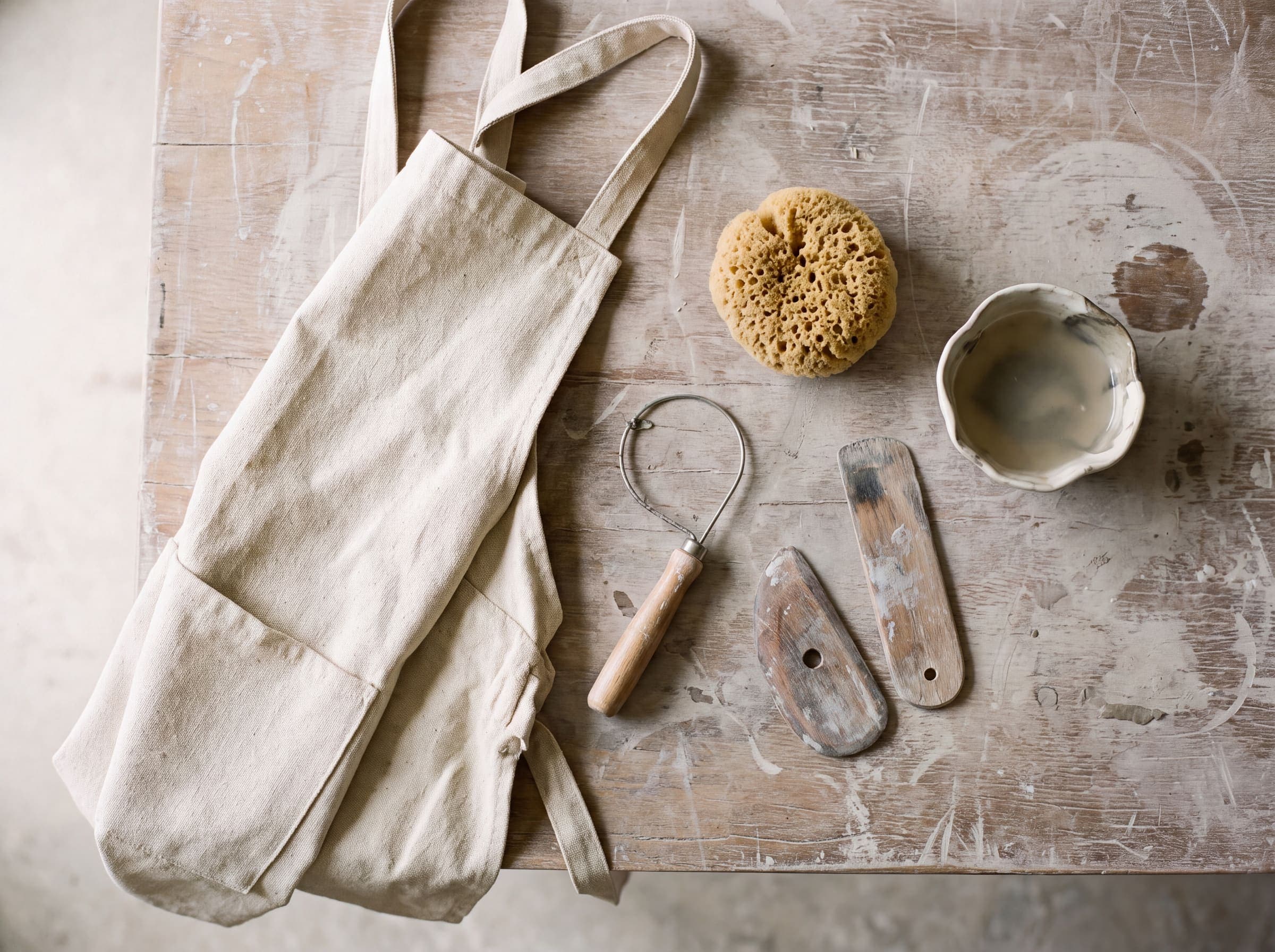
Wear something you genuinely do not mind ruining. Not "smart casual" — clay slip is a fine grey liquid that goes further than you expect, and it does not always come out of good fabric. Short sleeves, or sleeves that roll well above the elbow.
Take off rings and bracelets and leave them in a bag, not on the table. Clay gets into the settings of rings and stays there.
Keep nails short if you have a choice. Long nails make the inside wall of a pot very difficult to pull evenly, and you will feel it fighting you.
Bring nothing else. Clay, tools, aprons and towels are all here.
The first twenty minutes: centring
This is the part nobody warns you about, so we will.
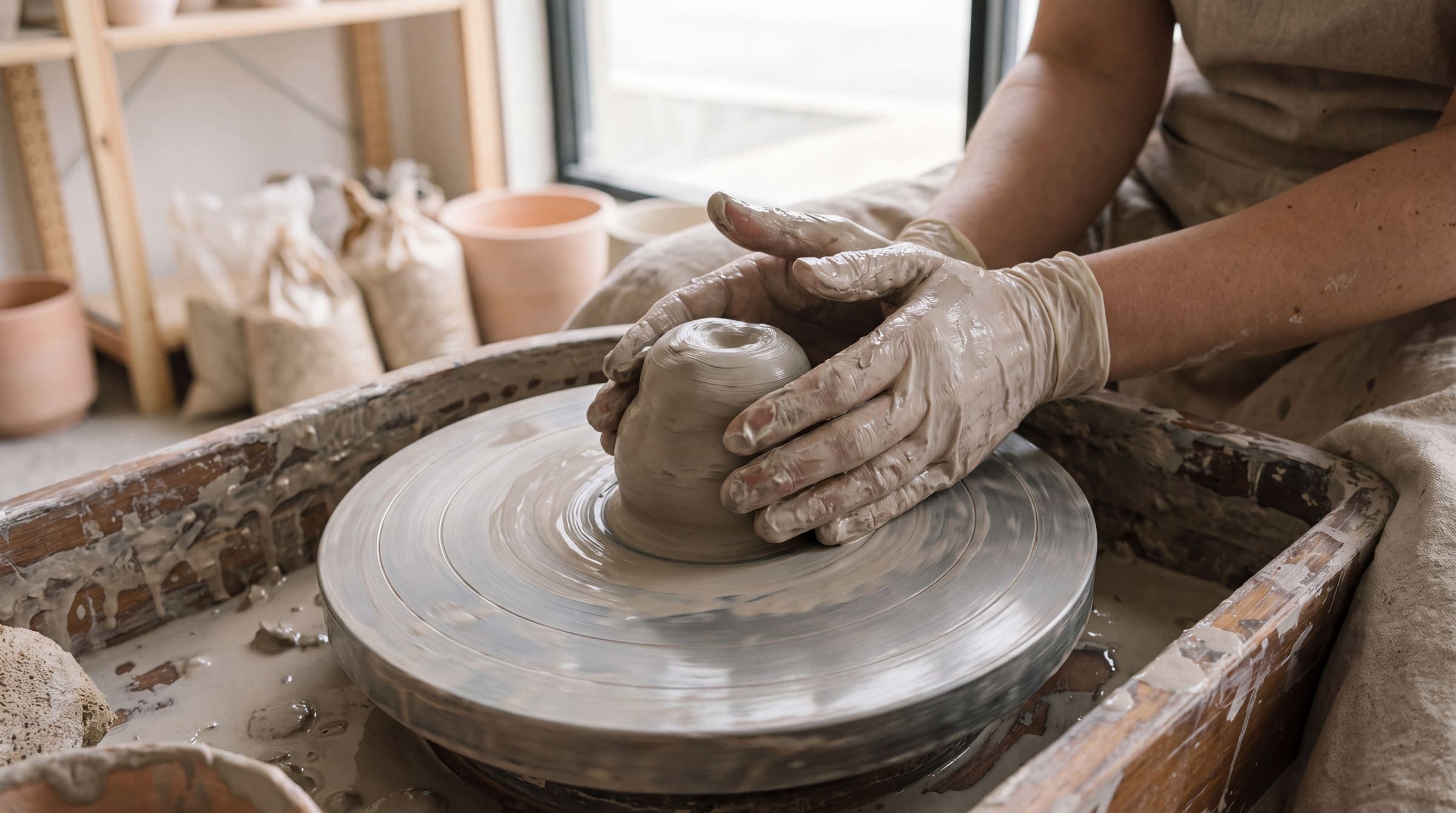
Before you can make anything, the lump of clay has to sit dead centre on the wheel while it spins. It does not want to. It wobbles, and the wobble travels up your arms, and the instinct is to grip harder — which makes it worse, every time.
Centring is not about strength. It is about bracing: elbows locked into your sides, hands steady, letting the wheel do the moving while you stay still. The moment it clicks is physical and unmistakable. The clay stops fighting and goes quiet under your palms, and most people say something out loud when it happens.
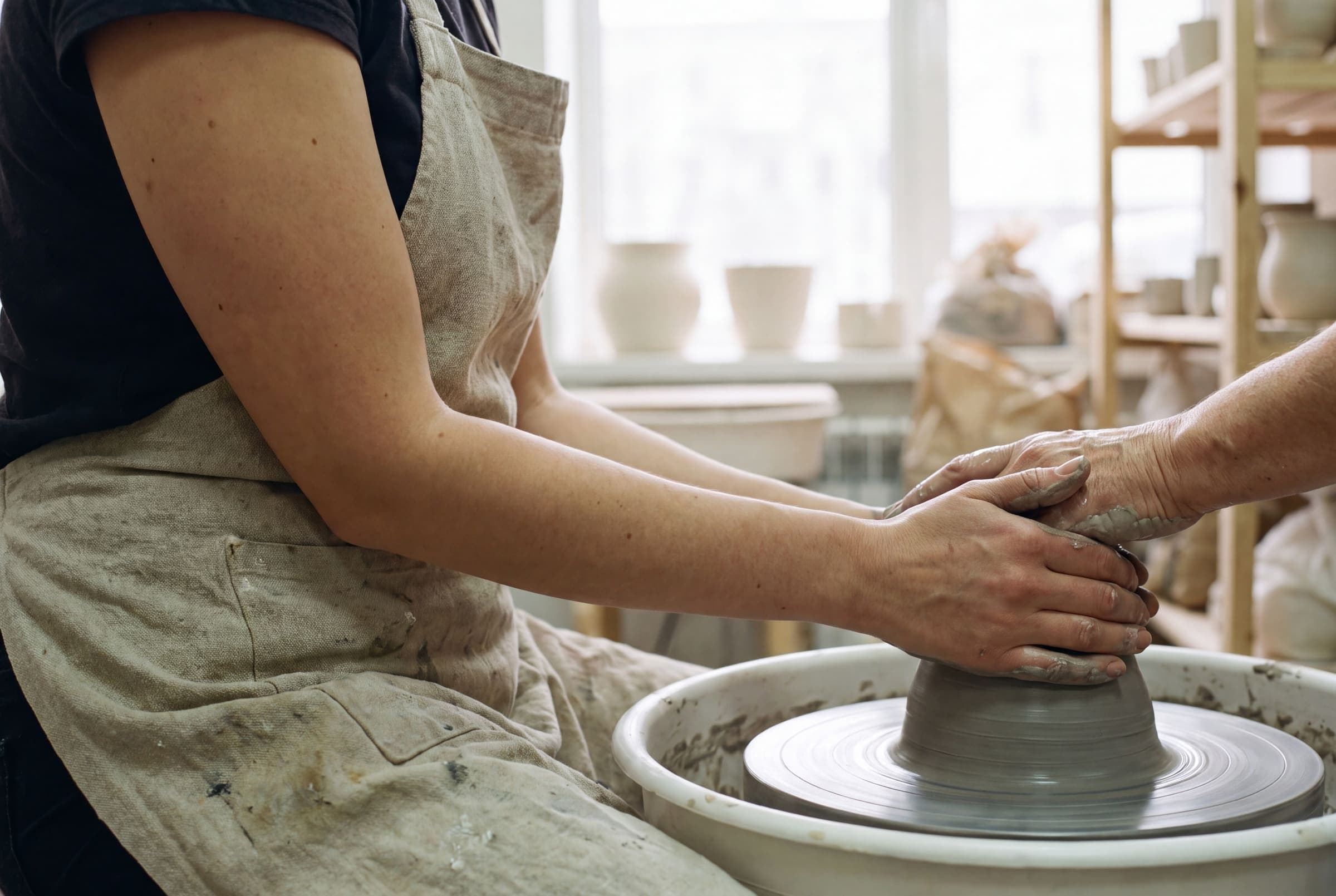
Some people get there in ten minutes. Some take the whole first session. Both are completely normal, and the tutor will have their hands over yours for the first few attempts either way.
What you will actually make
Something small, and probably slightly lopsided.
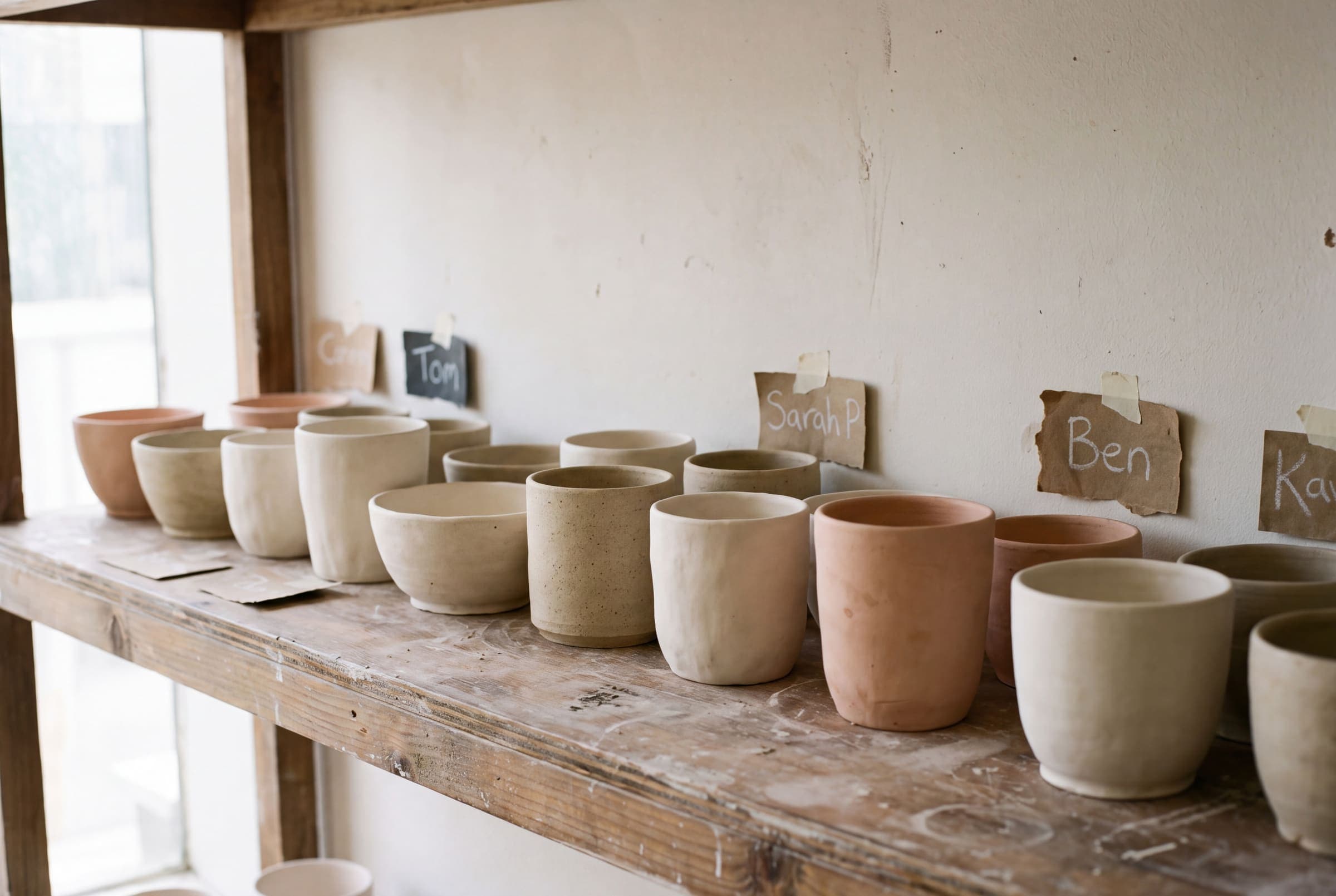
A first pot is usually a cup, a small bowl, or something that started as one and became the other. The walls will be thicker than you meant. The rim will not be perfectly level. It will be recognisably a thing you made, which is the entire point and the reason people keep the first one long after they have made better ones.
If the wheel is not what you want, hand building uses no wheel at all — pinch, coil and slab, working the clay with your hands on a table. It is the gentler way in and a lot of people prefer it. And if you cannot choose between the two, the ceramic session is both: time at the table, and a turn at the wheel.
For two people who want the room to themselves, couple pottery books the whole studio — nobody else at the next wheel.
Then you leave without it
This surprises people more than anything else, so it is worth being clear.
What you make on Saturday is not finished on Saturday. Wet clay has to dry slowly, or it cracks. Then it is fired once to make it hard — that is the bisque firing. Then it is glazed, and fired a second time at a much higher temperature, which is what makes it waterproof and food-safe.
That is two to four weeks, and there is no way to rush it that does not risk losing the piece.
You do not have to chase us. We message you on WhatsApp when it is ready to collect, and it will be waiting on a shelf with your name on it.
The questions we get most
Whether you can come on your own, whether it matters that you are not artistic, how messy it gets, whether children can join, and what to do if you cannot make your slot — those and about fifteen others are answered on one page.
Where we are
Studio Madrasi is on the first floor at No. 22A, 2nd Street, AE Block, Anna Nagar, Chennai 600040 — near the Edugenics Tuition Centre.
Sessions run Wednesday to Sunday at 11:00, 15:00 and 18:00, and last two hours. Six seats to a session, everything provided.
Six seats. One tutor.
Everything is provided, and most people arrive having never touched clay.